

India’s Hegemonic Designs in South Asia
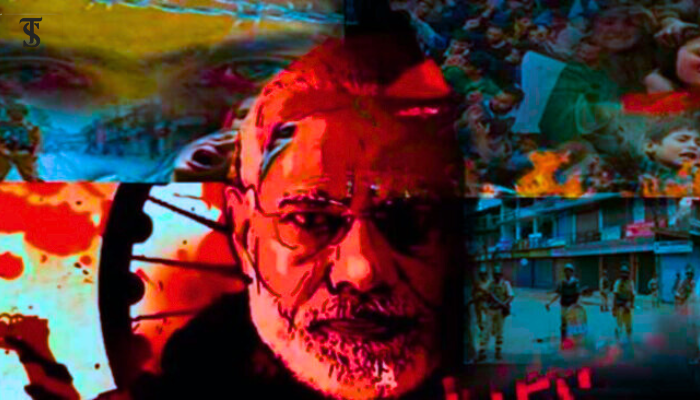
Since the emergence of the so-called “New India,” the country has consistently projected itself as a belligerent hegemon in South Asia—an actor that believes it can and should dominate smaller nations, much like any aggressive state does. India’s approach toward its smaller neighbors has always been hostile, particularly in the case of Pakistan, where it has repeatedly acted with the intent to destabilize the new state.
From denying Kashmiris their right to self-determination to initiating water wars, India’s actions clearly reflect its hegemonic ambitions. These aggressive policies have not only harmed Pakistan but have also endangered peace and prosperity across the entire subcontinent. Yet, Pakistan has never surrendered to India’s designs; instead, it has stood firm with dignity and pride, constantly exposing India’s attempts to dominate the region.
In 1971, India exploited Pakistan’s internal crisis, interfering in the domestic affairs of a sovereign nation—an act India referred to as the “opportunity of the century.” This led to the bifurcation of Pakistan. India’s interference hasn’t been limited to Pakistan; it has treated the smaller nations of South Asia as its strategic backyard, exerting its influence through economic pressure and military presence.
During the Monsoon uprising in Bangladesh last year, the authoritarian regime of Sheikh Hasina was toppled by a massive popular movement. India quickly provided her asylum, revealing how deeply it had entrenched itself in Bangladesh’s internal matters. Beyond giving sanctuary to a fugitive leader, India also worked to discredit the organic nature of the uprising by spreading false narratives and conspiracy theories about foreign interference. Once the new government came into power, it began reviewing several agreements signed with India—most of which were found to be against Bangladesh’s national interest and were originally signed to appease India.
In Nepal, the current government under Oli Sharma is also wary of India’s hegemonic ambitions and seeks to deepen ties with China to counterbalance Indian influence. This growing alignment with China has raised concerns in New Delhi.
The Maldives presents another example. The current Prime Minister, Muhammad Muizzu, campaigned on an ‘India Out’ slogan and secured victory, reflecting widespread resentment among Maldivians toward India’s overreach. More recently, in May, India attempted an unprovoked act of aggression against Pakistan through a false flag operation in Pahalgam to boost its domestic posture. However, it failed to rally international support. In desperation, India resorted to arrogance, banking on its economic status and claim to be a “net security provider.” Pakistan, however, did not yield. It responded with full force, compelling India to seek U.S. intervention for a ceasefire.
All of these incidents reflect a clear pattern: India aspires to dominate South Asia on its own terms, reducing smaller nations to mere satellites. Pakistan must continue to resist India’s coercive tactics, which include terrorism financing and economic subjugation.
SAARC has become practically obsolete due to India’s imperious and hubristic behavior. It is time for the rest of South Asia to move forward collectively, without India, to foster regional peace and development. Unless India abandons its hegemonic ambitions and begins respecting the territorial integrity and political sovereignty of its neighbors, it risks alienating every country in the region. Acts like waging water wars amount to direct aggression—something no sovereign nation can tolerate.
Disclaimer: The views and opinions expressed in this article are solely those of the author and do not necessarily reflect the editorial stance, policies, or official position of The Spine Times.
Fahad Chandio
The author is a student of LL.B. 4th semester at Bahria University, Islamabad.


